


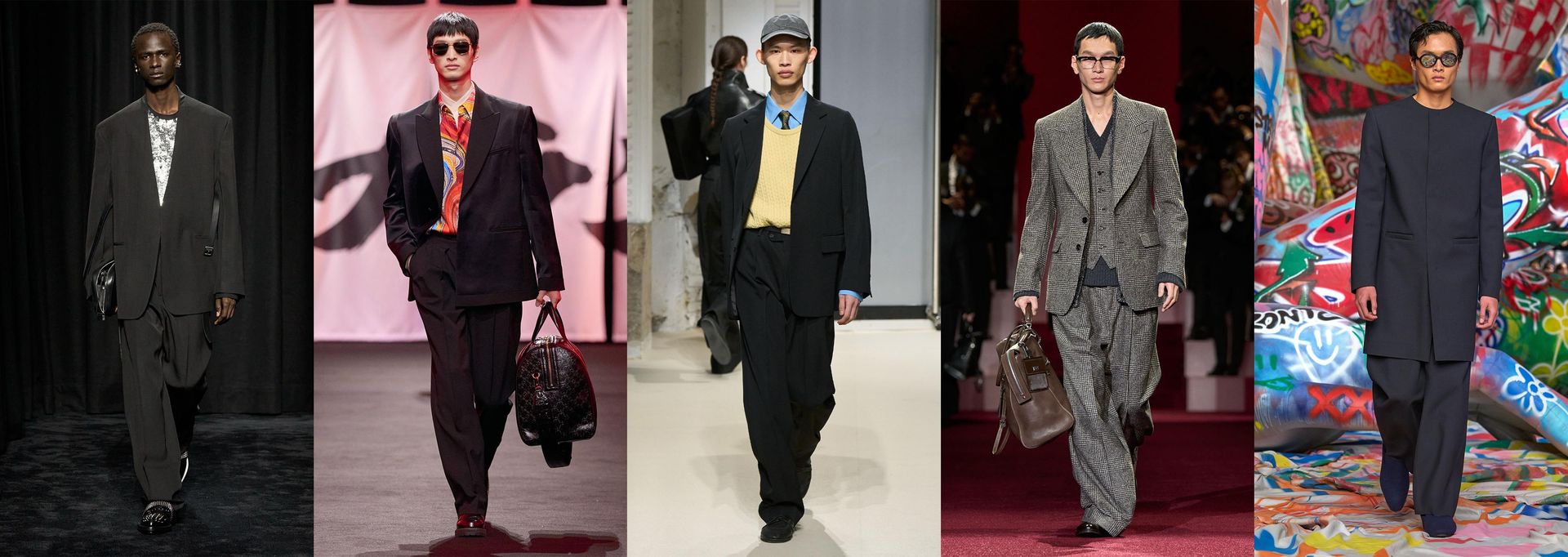
Elegant Men’s Suits: A Guide to FW 2025-26 Trends Pinstripe, Double-Breasted and Velvet Tuxedo
LVR Magazine Trends mens suits formal outfits
A man’s suit is more than clothing. It is a language of style that communicates elegance, discipline and personality. This winter season, the formal suit remains the cornerstone of the male wardrobe, but it evolves with modern interpretations that make it versatile and suitable for many contexts. The FW 2025-26 menswear runways confirm the return of tailoring, with softer proportions, oversized volumes and refined textures that give the suit a fresh identity.
Among the highlights are winter fabrics such as velvet and carded wool, paired with a palette that mixes timeless navy and grey with bold shades like emerald green and burgundy. Designers like Jil Sander, Diesel, Willy Chavarria and Brunello Cucinelli have reimagined the suit as a symbol of fluid elegance, able to adapt from office life to the urban landscape.
In this article we explore what a formal men’s suit really is, the key trends and fabrics for 2025-26, and how the suit changes depending on the dress code: from business formal to black tie, through cocktail attire and casual chic. Practical tips will help you choose the right fit, match accessories and colors, and make the most of every occasion. A formal suit is never just a garment: it is the result of conscious choices, sartorial culture and details that together can turn a man into an icon of style.
What Is a Formal Men’s Suit: The Unwritten Code of Male Elegance
A formal men’s suit is not just clothing: it is a manifesto of elegance that stands the test of time and trends. It is a coordinated set that tells who you are before you even speak. Single-breasted or double-breasted jacket, pleated trousers, crisp shirt, silk tie and a few essential accessories: every detail speaks of style and confidence. At its extremes, the spezzato plays on contrasts between jacket and trousers, while the tuxedo represents the pinnacle of black tie elegance. In all its forms, the suit remains the foundation of male formality, perfect for both business meetings and important events.
What really makes the difference are cut, fabric and fit. A bespokesuit, hand-sewn and customized in every detail, is an exclusive choice with timeless appeal—and a cost that reflects its uniqueness. Made-to-measure and prêt-à-porter options created by leading designers appeal to fashion lovers who want to stay aligned with modern styles and experiment with shapes and proportions.
Fit is the key: slim fit for clean, dynamic lines as seen in Tom Ford collections, regular fit for classic balance as offered by The Core, and relaxed fit for the oversized trends of the year, as shown on Casablanca’s runway. Single-breasted is versatile and modern, while double-breasted is authoritative and dramatic: the choice depends on occasion, body shape and personal attitude. Fabrics complete the picture: worsted wool and wool-silk blends for year-round wear, cotton, linen and lightweight wool for summer, velvet, heavy wool and tweed for winter. For a bold touch, pinstripes return in a contemporary twist, celebrated by houses like Acne Studios that highlight their appeal with modern pairings.
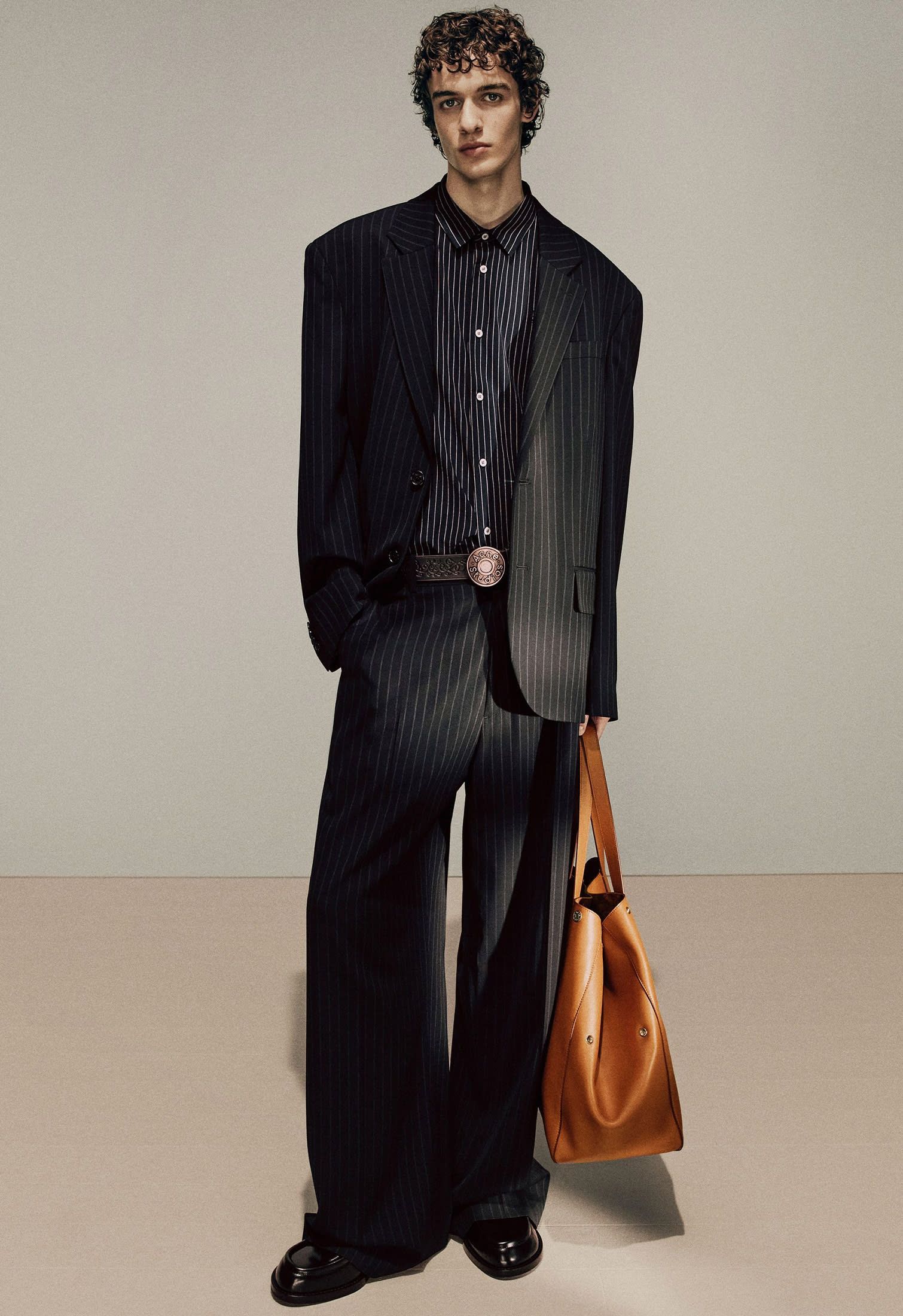
Men’s Suits: FW 2025-26 Trends in Fabrics, Colors and New Sartorial Shapes
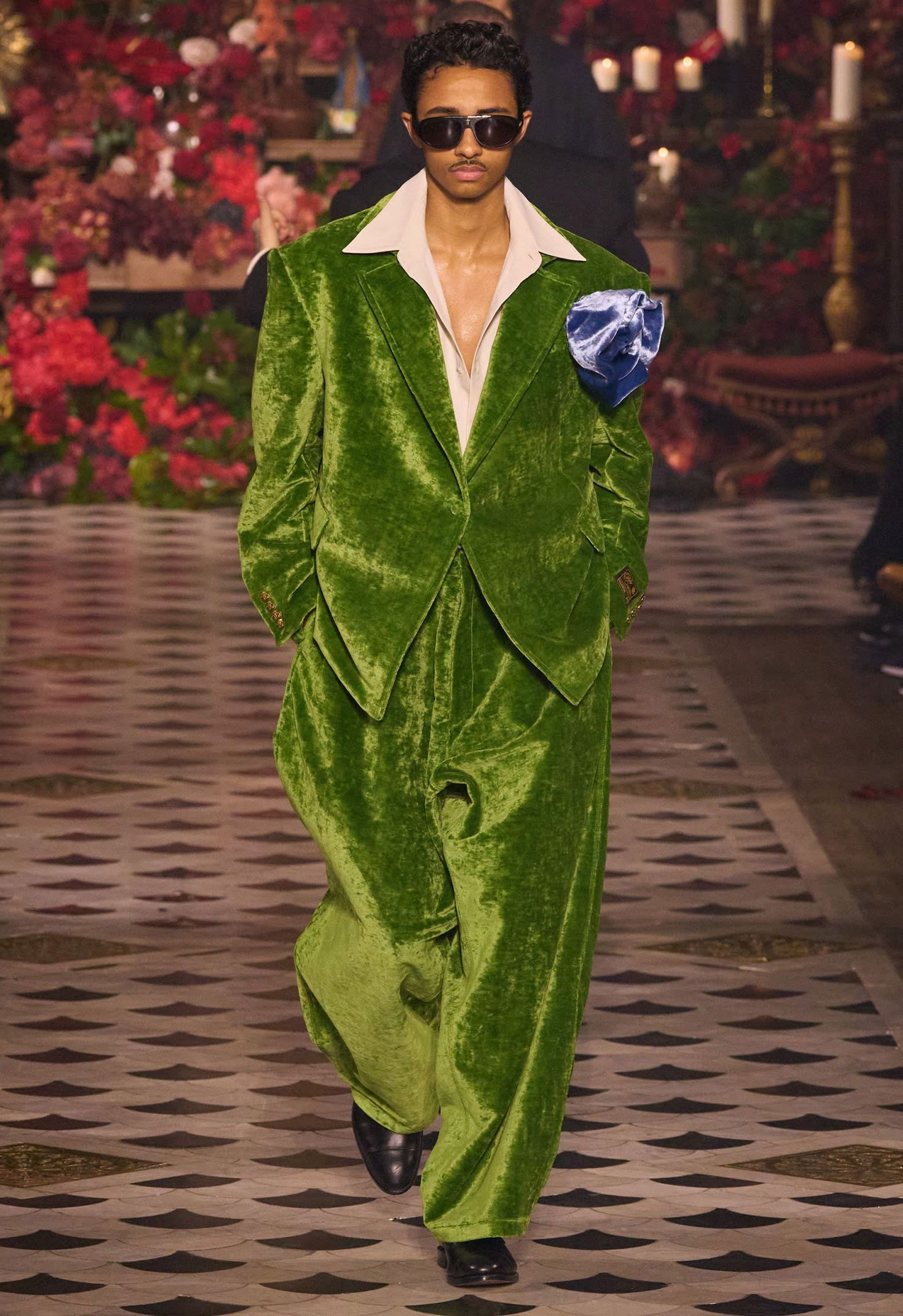
Fall Winter 2025-26 marks a new chapter for men’s suits, where tailoring tradition and innovation meet in a delicate balance. The runways speak clearly: softer shapes, generous volumes and refined sartorial details are back in the spotlight, from the six-button double-breasted jacket with peak lapels to the bold return of pinstripes in a modern twist. Designers like Jil Sander, Diesel and Willy Chavarria set the tone, reimagining the suit as a symbol of versatile elegance that adapts from business to ceremonies and leisure.
The most striking trends are found in fabrics. While worsted wool remains a timeless classic, this season velvet, carded wool and heavy lightweight wool dominate, perfect for facing the cold months with formal precision. For a winter wedding, a velvet suit by Brunello Cucinelli or Dolce & Gabbana is the ultimate choice, combining warmth and comfort with undeniable elegance.
On the color front, the FW 2025-26 palette rewards timeless classics: navy blue, charcoal grey, black and brown. Navy remains the most versatile for the office, while grey is unmatched in job interviews. Black, often overused, finds its best expression in evening events and highly formal ceremonies, but it also adapts to streetwear and officewear through the neo-tailoring experiments of Diesel, with its minimalist oriental influences, and Jil Sander, with its deconstructed metropolitan chic.
For the more daring, warm shades like cocoa and burgundy, or eccentric hues such as the intense green velvet by Willy Chavarria paired with black, white and violet details, offer a fresh edge. Colors should be chosen not only for taste but also for context and timing: lighter and more discreet during the day, deeper and richer at night.
How to Style Men’s Suits: Casual, Retro, Office and Evening Outfits
A formal suit is never static. It changes with the dress code and can be reinterpreted with creativity. From the discipline of business formal to the evening elegance of black tie, from the playful freedom of cocktail attire to the relaxed charm of casual chic, every occasion demands its own rules yet leaves space for personal style.
Business & Casual: From the Office to the City, the Suit That Lives Urban Life
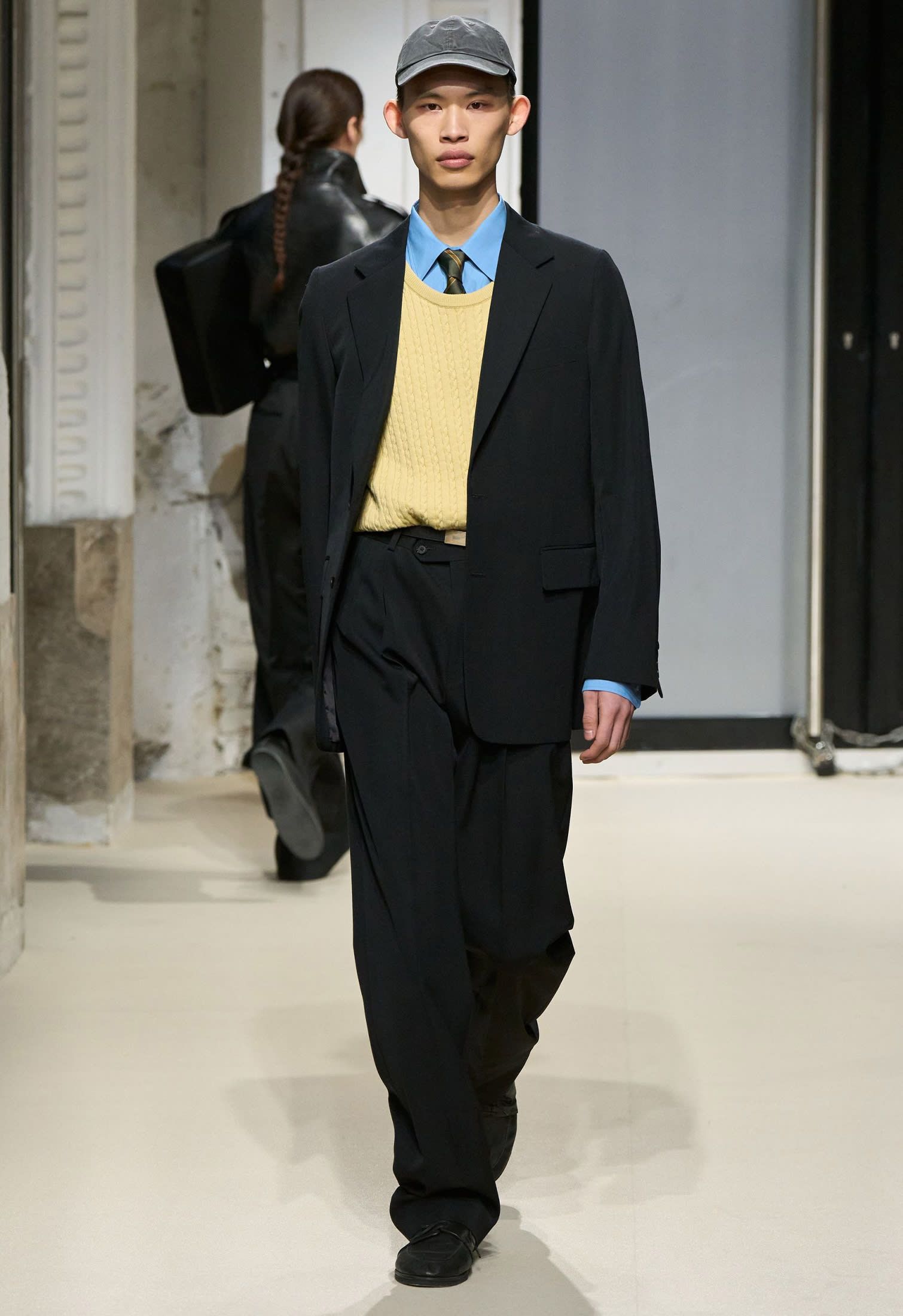
From office hours to city life, the business casual suit blends contrasts to fit the rhythm of the modern man. Auralee brings the suit into an urban, relaxed dimension: deconstructed volumes, layered styling with tie, sweater and shirt, plus street details like a cap, boots or trending sneakers that transform formality into a comfortable yet stylish look. Tom Ford, by contrast, reasserts the authority of business formal with sharp lines, a knee-length tailored coat and a coordinated tie, worn with loafers or even daring mules. It is the office suit at its most luxurious, designed to communicate sophistication and power.
The real skill lies in reusing the casual suit in less rigid contexts: a blazer with dark denim and loafers, wool trousers with a fine knit and minimal sneakers, a monochrome suit broken into separates for a modern touch, a jacket with a turtleneck in the colder months, or pinstripe trousers paired with a relaxed-fit shirt. Five quick ways to prove how a seemingly rigid suit can actually become a flexible investment, adaptable to endless combinations.
Formal and Retro Styles: From Classic Lines to Relaxed Volumes, Between Tradition and Modernity
In men’s wardrobes, the formal suit remains the meeting point between rigor and everyday elegance. The traditional navy or charcoal suit, paired with a white or light blue shirt and coordinated tie, is still the ideal choice for formal occasions and professional appointments. Oxford or derby shoes, preferably in black, together with discreet accessories like a silk tie and a pocket square, complete a polished and authoritative image.
Next to the classic formal look, FW 2025-26 opens the way to a new interpretation: retro relaxed tailoring. Dolce & Gabbana revives historic patterns such as Prince of Wales checks, reworked on warm winter fabrics with softer volumes and oversized proportions, paired with matching vests, long-sleeve V-neck T-shirts and trendy doctor bags. It is an elegance that looks at the past through a contemporary lens, turning the suit into a more fluid and versatile style statement.
Meanwhile, Dsquared2 introduces wool double-breasted suits with clean, essential lines that combine traditional rigor with modern, slimmer cuts. This is a refreshed vision of formal wear, perfect for men who want to stand out with understated yet strong character.
Black Tie & Cocktail: men’s elegance between ceremony and evening glamour
Black tie represents the highest code of formality, reserved for weddings, baptisms, other ceremonies and important evening events. The most refined choice is the black or midnight blue tuxedo, with a single-breasted jacket featuring satin lapels, a crisp white shirt with a stiff collar and a silk bow tie. To complete the look: polished black shoes, a slim leather belt, a neatly folded white pocket square and a minimalist watch. Houses like Zegna, Brunello Cucinelli and Dolce & Gabbana reinterpret the tuxedo with balance, combining sartorial tradition and couture details. D&G, for instance, reimagine the evening tuxedo with a classic silhouette enriched by floral appliqués on the lapel, transforming black tie into a truly theatrical statement.
The cocktail dress code, on the other hand, remains refined but offers more freedom. A single-breasted jacket can be paired with a patterned shirt and tailored trousers, while accessories become the stars: colorful pocket squares, polished loafers and contemporary watches. Split looks also work well, such as contrasting blazers and trousers, or the modern revival of pinstripes as presented by Boss and The Core. The result is an elegance that is less rigid and more versatile, perfect for refined evening gatherings, stylish dinners or social occasions where personality shines.
Color Tip: While bold palettes allow playful contrasts, classic hues follow precise rules. Navy pairs with white shirts, black or dark brown shoes and a navy coat in winter. Grey suits call for tonal socks, neutral ties and pastel shirts, paired with a camel coat. Black can be worn in a total look or softened with a white or midnight blue shirt and elegant black shoes, while more eccentric outfits allow creative twists on this timeless shade.
